The Role of Duality in Art: why opposites define beauty
In art, as in life, meaning is often born from contrast. Light becomes visible through darkness. Silence gives shape to sound. Strength is understood beside vulnerability. This is the essence of duality, the coexistence of opposites and it lies at the heart of the most powerful artistic creations. Far from being contradictions, these pairs complete one another, giving depth to emotion and form to abstract ideas. In this article, we explore the role of duality in art, and how this eternal dance of opposites continues to influence design, symbolism, and jewelry.
The ancient roots of duality in artistic thought

Duality is not a modern concept. For thousands of years, cultures around the world have turned to opposing forces light and dark, chaos and order, strength and softness to explain the nature of existence. In art, duality becomes a tool for exploring not only the external world, but also the inner self. From ancient cosmologies to classical sculpture, this interplay of opposites has shaped how we see, feel, and create.
Eastern Philosophies
In ancient Chinese philosophy, the Taoist principle of Yin and Yang teaches that all things contain opposing but complementary forces: the feminine and the masculine, the passive and the active, the shadow and the light. Rather than promoting conflict, this worldview emphasizes balance each element enhances and defines the other. This notion of harmonious opposition deeply influenced Chinese painting, poetry, and spatial design, where emptiness and form coexist with purpose.
Sacred Pairs in Mythology
Across ancient civilizations, duality was also woven into myth and religious art. In Ancient Egypt, gods often existed in complementary forms: Osiris and Isis, Ra and Apep pairs that represented creation and destruction, day and night, life and death. These divine couples symbolized cosmic order maintained through tension and balance.
In Hindu iconography, deities frequently embody contrasting energies within a single divine relationship. Shiva, the destroyer, and Parvati, the nurturer, are often shown together or fused into one form, illustrating how opposing forces can unite to create a complete whole. Such representations go beyond theology they are visual statements about the nature of existence.
Duality in Artistic Expression
Artists have long used duality to reflect inner conflict, emotional complexity, or metaphysical truths. Michelangelo sculpted dynamic tension into stone, contrasting muscular strength with frozen stillness. Caravaggio painted divine radiance bursting through heavy shadows, using light and darkness not only as visual tools, but as metaphors for the sacred and the profane.
Duality in Jewelry: beauty in balance

Jewelry is an art form built on balance of materials, shapes, textures, and symbolism. Designers often use duality to create tension and harmony within a single piece. A hard geometric setting surrounding a soft pearl. A rough-cut stone mounted on a sleek band. Matte and shine, symmetry and asymmetry all speaking to opposing yet complementary qualities.
Symbolically, jewelry becomes a perfect medium to express personal dualities: the visible and the private, the bold and the delicate, the sacred and the sensual. It allows wearers to carry contrasts within them not as contradictions, but as wholeness.
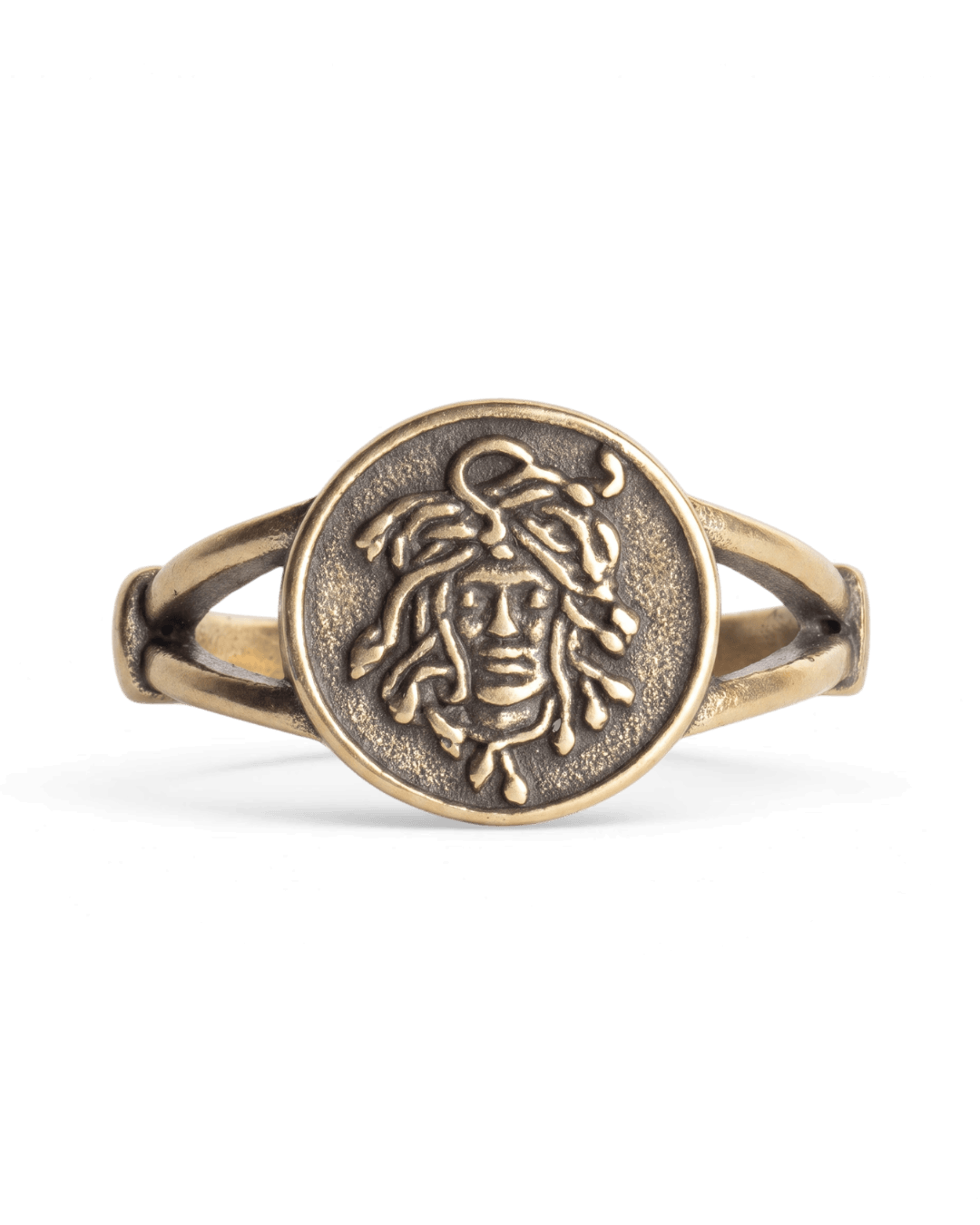
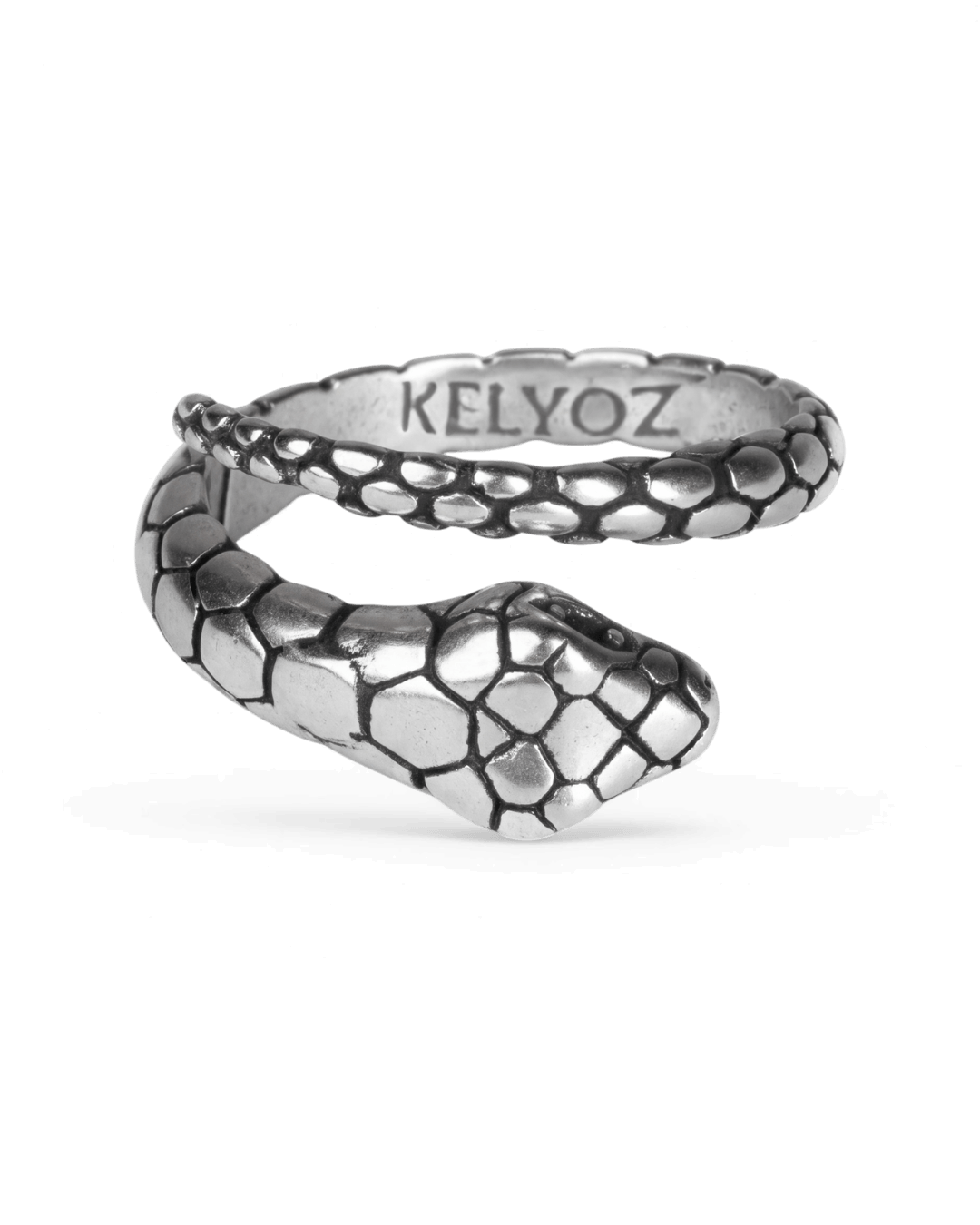
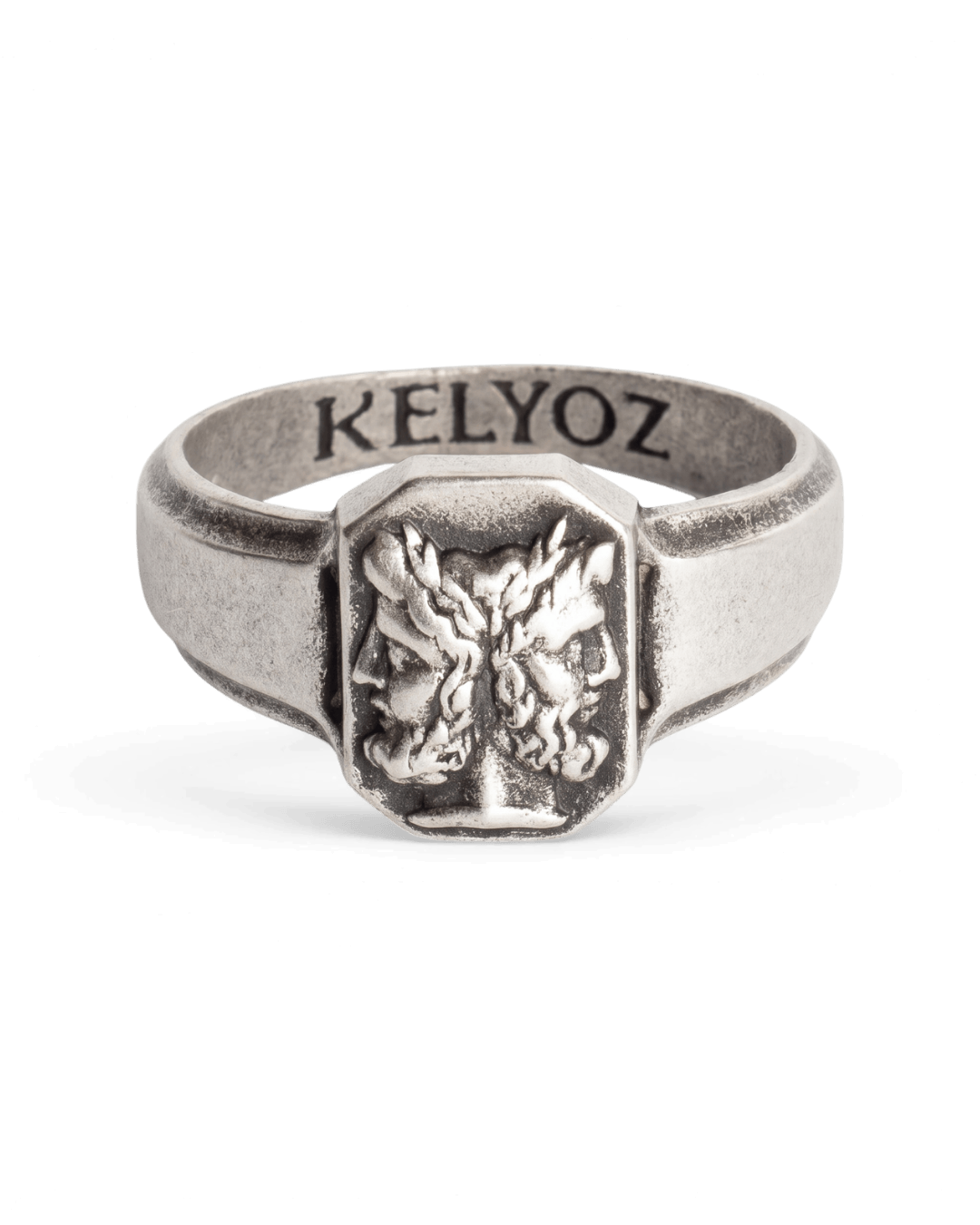
At Kelyoz, duality is woven into every design drawing from mythology, nature, and the interplay of ancient and modern. A ring might evoke both structure and freedom. A necklace might reflect both heritage and rebellion. The designs are not about choosing one side, but honoring both.
Wearing such pieces is an act of self-acknowledgment: I am light and shadow. I am softness and strength. I am one and many.
Why duality will always matter in art and design
In a world increasingly drawn to clarity, simplicity, and categorization, duality stands as a quiet rebellion. It reminds us that beauty often lies not in certainty, but in contradiction. In both art and design, it is the tension between opposites that creates richness spaces where strength can look like softness, and silence can speak louder than words. Duality doesn’t confuse it reveals.
Embracing complexity
Duality invites us to hold two truths at once: light and shadow, joy and sorrow, structure and spontaneity. The most compelling images and stories are rarely linear—they’re layered, ambiguous, and emotionally complex. In art, duality offers a more honest reflection of the human experience, resisting the urge to simplify what is, by nature, multifaceted.
Depth through contrast
In visual design, contrast is more than a stylistic choice—it is a source of energy. Whether through opposing colors, conflicting materials, or the fusion of traditional and modern ideas, contrast gives depth and resonance. It transforms flat surfaces into emotional landscapes, encouraging the viewer to pause, question, and connect.
The power of symbolic objects
Nowhere is duality more intimate than in jewelry. A single piece can express both vulnerability and resilience. It may shimmer delicately while carrying immense personal meaning. Jewelry, worn close to the skin, becomes a private language—one that allows for contradiction, transformation, and identity. A small symbol can mirror the quiet paradoxes of the one who wears it.
Carry duality close to your heart
In every piece of jewelry, the dance of opposites light and shadow, strength and softness, order and spontaneity speaks to our own inner contrasts. A pendant that pairs polished gold with a rough-cut stone, or a ring that balances geometric precision with organic curves, becomes more than adornment; it’s a wearable reflection of life’s richest tensions. These designs invite us to honor both sides of ourselves, celebrating vulnerability alongside resilience. When you choose jewelry that embodies duality, you carry a daily reminder that true beauty arises not from uniformity, but from the harmonious coexistence of opposing forces.
Whether you’re drawn to the whisper of matte against shine or the union of symmetry and asymmetry discover how Kelyoz captures duality through timeless jewelry designs. If the interplay of contrast resonates with you, explore how Kelyoz transformed this concept in our Yin-Yang Harmony Necklace. Crafted to echo the balance of opposing energies, this piece invites you to wear your complexity with grace.
Conclusion
Opposites do not divide they define. In the tension between light and dark, strength and softness, certainty and mystery, beauty is born. The role of duality in art is not to offer answers, but to open space for complexity, emotion, and truth. In wearing designs that reflect this principle, we do more than adorn ourselves we honor the contradictions that make us human.
FAQ
Is duality only about visual contrast?
Not at all. Duality can exist in ideas, themes, or even intentions. A minimalist piece may carry a deeply complex story. A sharp, geometric shape might symbolize vulnerability. In this way, duality is both visual and conceptual.
Can duality enhance the storytelling of a jewelry piece?
Yes. Jewelry that combines opposites rough and smooth textures, matte and shine, soft curves and hard angles can tell a story of transformation, balance, or personal journey. These contrasts often resonate with wearers who see their own complexity reflected in the design.
Why does duality resonate so strongly with people today?
In a world that values both individuality and connection, logic and emotion, duality speaks to our desire to reconcile who we are with who we’re becoming. It offers space for nuance something increasingly rare and deeply needed.